
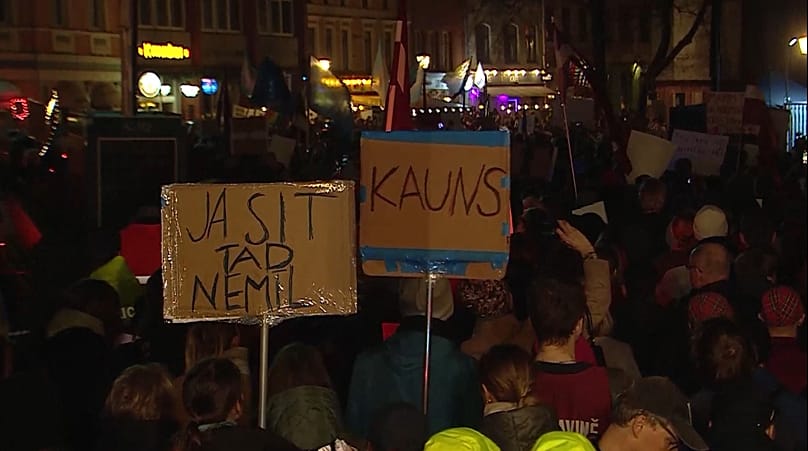

Following the parliamentary decision to abandon the Istanbul Convention, Latvia is witnessing one of its largest civic mobilizations in decades. Thousands of people , including survivors, activists, students, parents, and foreign diplomats , have taken to the streets to voice their frustration and defend the progress the country has made in combating gender-based violence.
Demonstrations have erupted not only in the capital, Riga, but across smaller towns as well, showing that the issue resonates far beyond political circles.
Protesters argue that the convention has been instrumental in improving crisis centers, strengthening police response, and shaping laws that protect women in abusive situations. Many worry that withdrawing now could reverse years of hard-won advancements and leave vulnerable women without the support they desperately need.
The President’s decision to send the bill back to Parliament has further energized the movement, with many seeing it as a sign that public pressure is working. Activists insist that this moment is bigger than one law , it is about ensuring that the country continues to move forward rather than stepping back into systems that once left victims unheard and unprotected.
The ongoing demonstrations reflect a growing demand for accountability, transparency, and respect for human dignity.


 "Bihar CM Transfers ₹10,000 Each to 2.5 Million Women Under Mukhyamantri Mahila Rojgar Yojana")